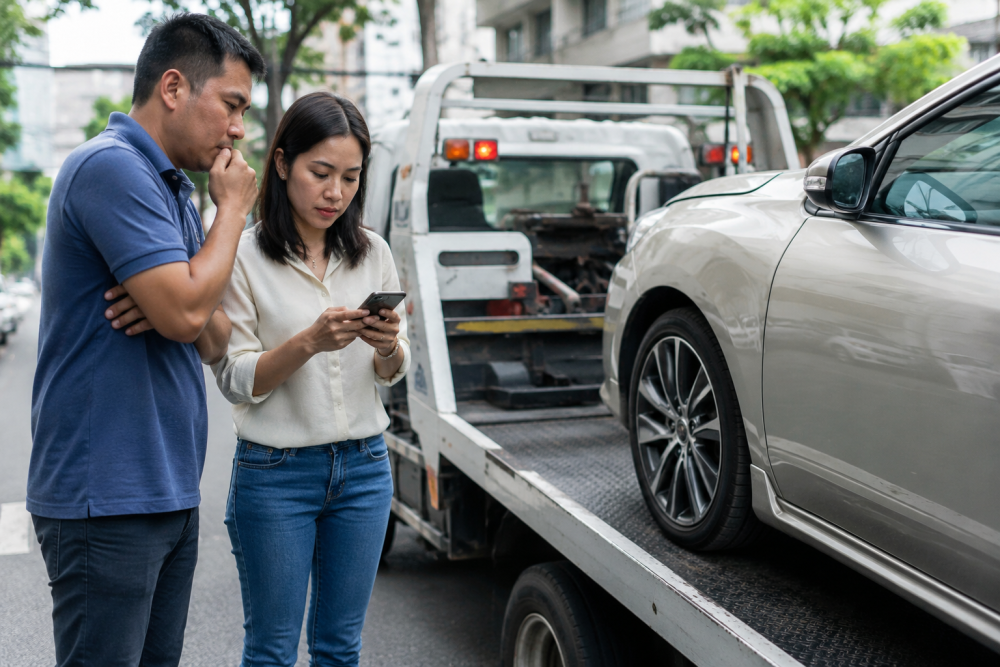

Yes, police and traffic authorities in the Philippines can tow your car if it violates traffic laws or obstructs public roads. Under Republic Act No. 4136 and local MMDA ordinances, vehicles may be impounded for illegal parking, obstruction, lack of documents, or certain violations. In 2026, towing enforcement is strict in Metro Manila and major cities like Cebu and Davao.
Who Can Tow Your Car in the Philippines?
Authorized authorities include:
- Philippine National Police (PNP)
- MMDA (Metro Manila Development Authority)
- local traffic enforcers (LGUs)
- accredited towing operators
Unauthorized towing by private individuals is illegal.
When Can Police Tow Your Car in the Philippines?
Your car can be towed if it:
- is illegally parked
- blocks traffic or emergency access
- is abandoned
- is involved in a violation or checkpoint issue
- has no valid registration
- is driven without a valid license
MMDA Towing Rules (Metro Manila 2026)
In Metro Manila, MMDA enforces strict towing policies:
- immediate towing for obstruction
- no-parking zones strictly enforced
- CCTV monitoring supports enforcement
Roads like EDSA and C5 are high-enforcement zones.
Can Police Tow Your Car Without Notice?
YES, in most cases:
- if your vehicle blocks traffic
- if parked illegally
In some cases:
- a citation may be issued first
- but this is not required in obstruction cases
NCAP vs Towing
Many drivers confuse NCAP with towing.
Under NCAP (No Contact Apprehension Policy):
- violations are recorded via cameras
- fines are issued electronically
Key point:
- NCAP usually results in fines only
- towing happens only if the vehicle is physically obstructing traffic
What Happens If Your Car Is Towed?
Once towed:
- vehicle is brought to an impound yard
- violation is recorded
- daily storage fees begin
The longer you wait, the more you pay.
Towing Fees in the Philippines
Typical costs:
- towing fee
- daily storage fee
- violation fines
Metro Manila (MMDA example)
- towing: ₱1,500 – ₱2,500
- storage: ₱200 – ₱500/day
Fees vary depending on location and vehicle type.
How to Get Your Car Back After Towing
To release your vehicle:
- pay fines and towing fees
- present:
- valid ID
- driver’s license
- OR/CR (vehicle registration)
Without documents, release may be delayed.
LTO Impoundment Rules Philippines
The Land Transportation Office may impound vehicles for:
- no driver’s license
- expired registration
- serious traffic violations
Release requires compliance with LTO rules.
Can Police Impound Your Car for No License?
YES.
If caught driving without a license:
- vehicle may be impounded
- fines are issued
- additional penalties may apply
Towing Scams in the Philippines
Illegal towing scams exist.
Warning signs:
- no official ID
- no marked tow truck
- asking for cash immediately
Always verify authority before allowing towing.
Real-Life Towing Scenarios
- illegal parking in Metro Manila → immediate towing
- blocking driveway → towing without warning
- no license at checkpoint → possible impoundment
What Most Drivers Don’t Know
- towing can happen instantly
- fees increase daily
- NCAP does not usually involve towing
- documents are required for release
At a Glance
| Situation | Towing Risk | Outcome |
|---|---|---|
| Illegal parking | High | Immediate towing |
| Obstruction | Very High | No warning towing |
| No license | Medium | Possible impound |
| NCAP violation | Low | Fine only |
How to Avoid Your Car Being Towed
- park legally
- follow traffic signs
- keep documents updated
- avoid blocking roads
Related Guides
- Driving Without License Philippines
- What Happens After a Car Accident Philippines
- Reckless Driving Philippines
FAQ
Can police tow your car in the Philippines?
Yes, if it violates traffic rules or obstructs public roads.
Can your car be towed without warning?
Yes, especially in obstruction or illegal parking cases.
How much are towing fees in Metro Manila?
Around ₱1,500–₱2,500 plus daily storage fees.
How do you get your car back after towing?
Pay fines and present required documents at the impound yard.
Towing in the Philippines is strictly enforced, especially in Metro Manila. Most cases happen due to illegal parking or obstruction, and once your vehicle is impounded, costs can increase quickly. Understanding MMDA and LTO rules helps you avoid unnecessary penalties and delays.